-


-
-
Softwares
Logistics

Tookan
Delivery management software for optimizing fleet operations

Evermile
Last-mile delivery orchestration platform with real-time tracking

Mappr
Route optimization and territory mapping for delivery networks
Commerce

Yelo
On-demand delivery platform for restaurants and retail businesses

Jugnoo
Hyperlocal delivery and ride-hailing solution for urban markets
Pickup and Delivery Apps
Hassle free ordering process with Tookan Customer apps.
Growth

Outplay
Sales engagement platform for high-performing teams

Appvirality
Referral Marketing Software Designed for Accelerated Growth

Rivia.ai
One platform to showcase, onboard, listen, and grow

Super Hippo
Customer engagement platform with omnichannel messaging

Growthscore
Collect Actionable Feedback and Boost Customer Satisfaction with NPS

NOTP
customer engagement solution that lets users log in or sign up via WhatsApp
-
-
Brands
- Consulting
-
Ordering
Food Grocery Home Services -
Delivery & Dispatch
Pick Up & Delivery Courier Delivery 3PL Delivery Dispatch -
Consultation
Telemedicine Fitness Legal Consultation -
Mobility
Taxi Software App Like Uber Car Rental -
Customer Engagement
Conversational support WhatsApp Marketing Customer Acquisition -
Sales Engagement
Inbound Sales Pipeline Management Sales Performance Analytics
Explore All Industries
-
- Brandcamp
-
Learn







Blog Jungleworks
Stop Renting Your Store: Why Yelo Is the Best Multi Vendor Marketplace Platform Over Shopify
The Illusion of Product–Market Fit on Shopify for a Multi Vendor Marketplace
In today’s fast-growing platform economy, speed to market often feels like the ultimate advantage. As a result, many founders choose Shopify without hesitation. It’s affordable, visually polished, and promises you can launch quickly.
However, if your long-term goal is to build a multi vendor marketplace, that promise can quickly turn into an expensive mistake.
Shopify was designed for linear retail: one seller, one inventory, many buyers. While that works well for traditional ecommerce, a multi vendor marketplace follows a completely different logic. It requires real-time coordination between vendors, customers, and delivery partners, along with complex permissions, commissions, and logistics.
Because Shopify lacks this foundation, founders attempting to scale a multi vendor marketplace don’t gain simplicity or control. Instead, they inherit operational complexity, rising costs, and constant friction.
This guide explains why Shopify struggles as a marketplace platform, how the hidden “Shopify Tax” slows growth, and why Yelo gives founders true ownership from day one.
1. The Plugin Trap: Why Shopify Breaks at Marketplace Scale
The biggest difference between a regular online store and a multi vendor marketplace lies in permission-based architecture. Marketplace owners must safely delegate control to hundreds of independent sellers.
Unfortunately, Shopify was never built for that.
1.1 Multi-Developer Conflicts
To make Shopify function like a marketplace, founders rely on third-party apps for:
- Vendor onboarding
- Commission and split payments
- Delivery and tracking
- Reviews and ratings
- Notifications and analytics
Each app comes from a different developer, follows its own update cycle, and runs on separate infrastructure. As a result, a single broken update can disrupt payouts, order routing, or vendor access.
Consequently, founders spend time managing tech issues instead of growing supply and demand.
1.2 Script Bloat and Performance Issues
Every plugin adds more scripts to your storefront. Over time, this leads to slower load times, lower mobile conversions, and weaker SEO performance.
Even worse, a one-second delay can reduce conversions by up to 7%. In a competitive marketplace, those losses compound rapidly.
Yelo Advantage:
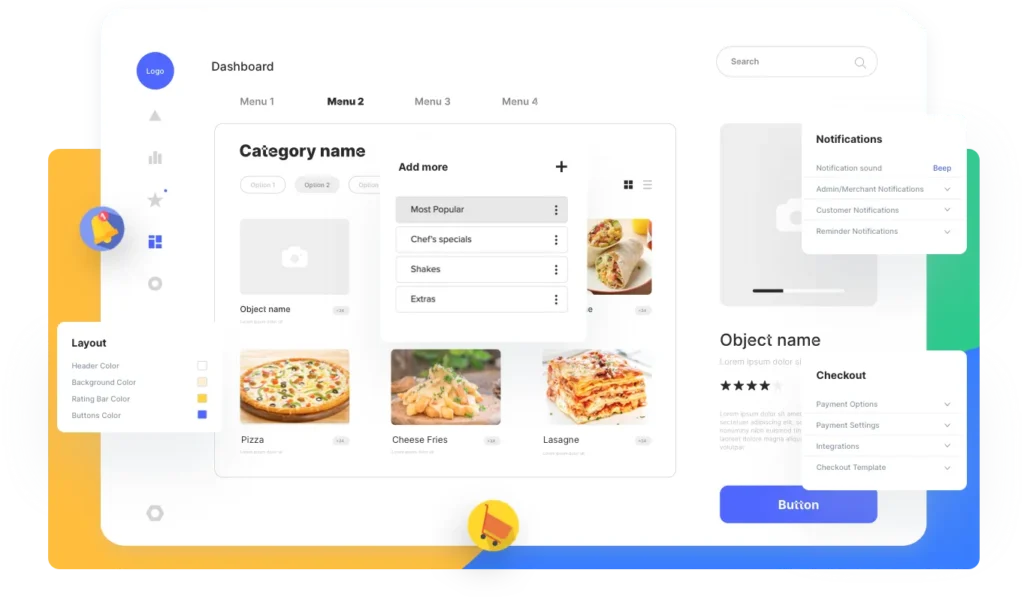
Yelo eliminates plugins entirely. It delivers vendor dashboards, customer apps, admin controls, and logistics as one unified system—fast, stable, and scalable.
2. The Real Cost of Running a Marketplace on Shopify
At first glance, Shopify’s pricing looks attractive. However, growing a multi vendor marketplace quickly exposes the true cost.
2.1 Hidden Monthly Expenses
As marketplaces scale, founders usually pay for:
- High-tier Shopify or Shopify Plus plans
- A multi-vendor marketplace app
- Logistics and delivery integrations
- Analytics and reporting tools
- Loyalty programs, SMS, and notifications
Together, these costs often exceed $3,000 per month—before marketing spend. Moreover, each service comes with separate billing and support, which increases operational chaos.
2.2 The “Success Tax”
Shopify charges extra transaction fees when founders can’t use Shopify Payments. Since most marketplaces require split payouts, this penalty becomes unavoidable.
As GMV grows, so do these fees. Therefore, success directly increases overhead.
Yelo Pricing Model:
Yelo uses a predictable, fixed-cost infrastructure. You grow vendors, orders, and revenue without getting punished for scaling.
3. Logistics: Where Most Marketplaces Collapse
In hyperlocal commerce—food, grocery, pharmacy, or services—delivery defines the brand experience.
Shopify assumes delayed shipping through couriers. That assumption fails instantly in a multi vendor marketplace.
3.1 Disconnected Order and Delivery Flow
On Shopify, the system stops at checkout. Founders must push orders to drivers using middleware tools, which introduces delays and sync errors.
As a result, drivers arrive at the wrong time, food quality drops, and customer complaints rise.
Yelo Advantage:
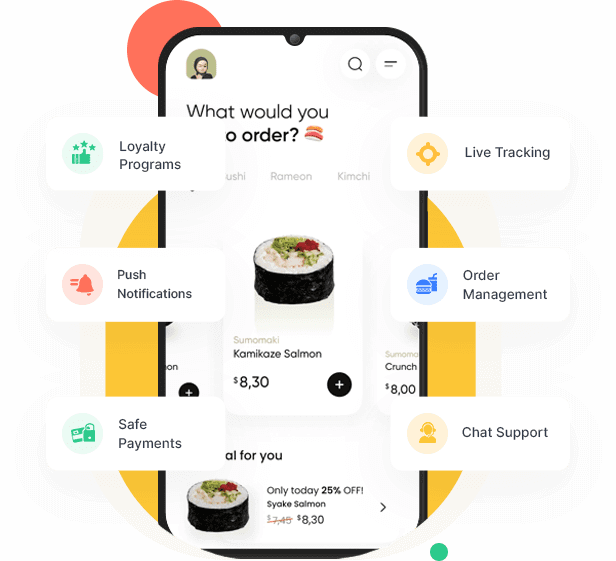
Yelo connects orders and delivery natively. When a vendor accepts an order, the platform auto-dispatches drivers, starts GPS tracking, and aligns delivery timing with preparation.
3.2 Real-Time Tracking Is No Longer Optional
Modern customers expect live maps, accurate ETAs, and transparency.
Yelo delivers all three, along with route optimization and proof of delivery. Consequently, refunds, disputes, and support tickets drop significantly.
4. Why Food Delivery Multi Vendor Marketplaces Fail on Shopify
Food delivery demands orchestration, not just transactions.
4.1 Preparation Time Logic
Shopify treats food like apparel. It ignores kitchen load, prep sequencing, and timing.
Yelo solves this with item-level prep times, smart buffers, and driver dispatch aligned to food readiness. As a result, meals leave the kitchen hot and arrive on time.
4.2 Polygon-Based Delivery Zones
Simple radius delivery ignores traffic, rivers, and congestion. Therefore, founders accept unprofitable orders.
Yelo uses polygon geofencing to define precise service areas. This prevents cancellations and protects margins.
4.3 Native Kitchen Display System
Busy kitchens can’t manage cluttered dashboards. Yelo’s KDS offers clear order prioritization, highlighted instructions, and one-tap dispatch—built for real-world kitchens.
5. B2B Marketplaces Need More Than “Add to Cart”
B2B buying involves pricing tiers, bulk logic, and negotiation. Shopify relies on fragile workarounds for these flows.
Yelo includes customer-specific pricing, volume discounts, and RFQ workflows. Therefore, it supports wholesale and enterprise commerce natively.

6. Stop Renting Your Multi Vendor Marketplace Business
When you build on Shopify, you rent infrastructure, data access, and business logic. Policy changes or account restrictions can shut you down overnight.
Yelo restores control. Founders own vendor relationships, operational rules, and platform data—without platform risk.
7. Data Ownership Is the Real Asset
A successful multi vendor marketplace is ultimately a data engine.
Shopify fragments insights across plugins and limits raw access. In contrast, Yelo provides a unified, structured database ready for analytics, AI, and investor due diligence.
8. Scale Globally Without Losing Local Control
Shopify’s global tools support cross-border shipping—not local delivery fleets.
Yelo enables multi-country operations from one dashboard, with local taxes, commissions, currencies, and RTL language support. As a result, founders scale globally while staying hyperlocal.
9. Migrate from Shopify to Yelo Without Downtime
Yelo follows a proven migration process:
- Parallel platform setup
- SEO-safe 301 redirects
- Clean data mapping
- Fast vendor onboarding
Most vendors prefer Yelo immediately because it simplifies their daily operations.
Final Thoughts: Build What You Own
A multi vendor marketplace is not a store.
It’s an operating system for commerce.
Shopify helps you launch fast. However, Yelo helps you scale sustainably, profitably, and independently.
If you’re serious about owning your platform, your data, and your future, it’s time to stop renting—and start building with Yelo.
Subscribe to stay ahead with the latest updates and entrepreneurial insights!
Share this article:


Subscribe to our newsletter
Get access to the latest industry & product insights.
You may be interested in these articles
-
Yelo4th February 2026
How to Create Online Ordering for a Restaurant (That Gets Results)In the modern food service landscape, online ordering for restaurants has.. [..]Read story
-
Yelo28th January 2026
How AI Is Transforming Hyperlocal Marketplaces in 2026: From Personalisation to Autonomous DeliveryUrban commerce in 2026 is no longer defined by distance—it’s defined by.. [..]Read story
-
Yelo21st January 2026
Beyond the Storefront: How Direct-to-Consumer (D2C) Brands Are Reclaiming Their Margins in 20261. Introduction: The Great Decoupling of D2C Brands By 2026, the digital.. [..]Read story
-
Yelo14th January 2026
How Hyperlocal Delivery Is Changing Urban E-commerce: Trends and Predictions for 2026The retail landscape has undergone a dramatic transformation. As we move.. [..]Read story