-


- Industries
-
Ordering
Food Grocery Home Services -
Delivery & Dispatch
Pick Up & Delivery Courier Delivery 3PL Delivery Dispatch -
Consultation
Telemedicine Fitness Legal Consultation -
Mobility
Taxi Software App Like Uber Car Rental -
Customer Engagement
Conversational support WhatsApp Marketing Customer Acquisition -
Sales Engagement
Inbound Sales Pipeline Management Sales Performance Analytics
Explore All Industries
-
-
Learn
- Partner
- Pricing








Blog Jungleworks
How Real-Time Tracking Improves Customer Experience in On-Demand Delivery
Let’s be honest. We’ve all been there, refreshing that order page obsessively, wondering if our food is actually on its way or if the app has just given up on us. The on-demand delivery world has changed everything about how we shop, eat, and live, but here’s the thing: getting stuff fast isn’t enough anymore. What really makes the difference between a delivery service you’ll use once and one you’ll swear by? It’s knowing what’s going on with your order.
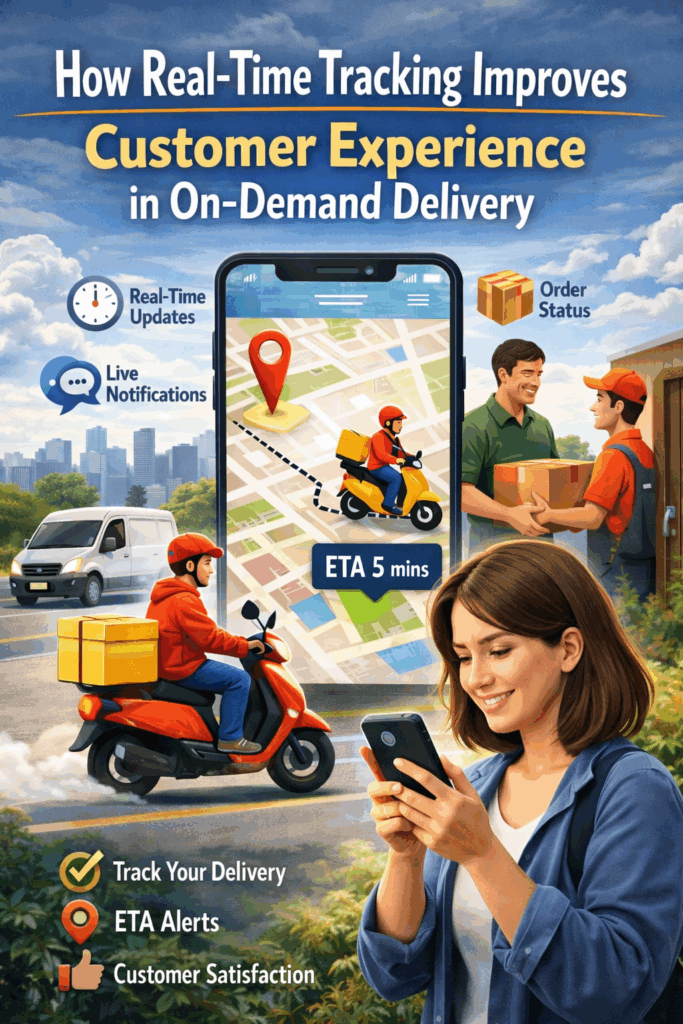
Real-time tracking has gone from being this cool extra feature to something we just expect. And honestly? There’s no going back. Whether you’re ordering lunch, restocking your fridge, or getting that thing you forgot you needed until right now, you want to see where it is. Not because you don’t trust the service, but because waiting in the dark is genuinely stressful. This isn’t just about a little dot moving across a map. It’s about fundamentally changing how delivery works and how we feel about the whole experience.
Think about it. Real-time tracking gives you constant updates about where your stuff is, when it’s likely to show up, and where your driver is at any given moment. Businesses that don’t offer this? They’re fighting an uphill battle. Understanding why tracking makes such a massive difference to customer experience isn’t just about listing benefits. It’s about getting into why we, as humans, need this kind of visibility and what it does for our stress levels, our trust in companies, and our willingness to order again.
Why Waiting Without Information Drives Us Crazy
Our brains really don’t like not knowing things. When you place an order and then hear nothing, your mind starts filling in the blanks, usually with worst-case scenarios. This whole “tracking anxiety” thing is real, and it comes from our need to feel like we have some control over situations. Before tracking became the norm, you’d order something, get a vague “it’ll be there in 45 minutes,” and then just… hope for the best. That uncertainty created unnecessary stress, led to people calling customer service repeatedly (which nobody enjoys), and often meant you ended up annoyed even when your order arrived perfectly on time.
Real-time tracking fixes this by replacing all that uncertainty with actual information. When you can see exactly where your order is and get a realistic arrival time, your anxiety drops significantly. You can actually plan your time instead of just sitting around waiting. You know when you need to be at the door versus when you can keep doing whatever you were doing. Research backs this up too. People who can track their orders report being happier with the service even when delivery times are exactly the same as without tracking. It’s all about how it feels, not just how long it takes.
But it goes deeper than just feeling less anxious. Tracking makes you feel involved in the process. Instead of passively waiting and getting progressively more annoyed, you’re actively watching your order make its way to you. You’re engaged. That engagement keeps you feeling positive about your purchase from the moment you hit “order” until someone hands you your bag. The psychological difference between feeling helpless and feeling informed might seem subtle, but it matters enormously for how satisfied you end up being.
Trust Comes From Seeing What’s Actually Happening
Trust is everything in business, and nothing builds trust quite like showing people exactly what you’re doing. Real-time tracking offers a level of transparency that old-school delivery could never match. When you can verify that your order is moving along as it should, you start believing the company knows what it’s doing. You see evidence that they’re reliable, honest, and competent. All of that adds up to you becoming a loyal customer instead of someone who bounces between different services.
This transparency becomes especially important when things go wrong. Delays happen. Traffic exists. Weather doesn’t cooperate. Life gets in the way. Without tracking, you only find out there’s a problem when your delivery doesn’t show up on time, and by then you’re already frustrated. With tracking, you see the delay happening in real time. You can watch your driver sitting in traffic and understand that they haven’t forgotten about you or screwed up. They’re just dealing with the same traffic you’d be stuck in if you were driving.
Smart businesses use real-time tracking as a way to get ahead of problems. When delays happen, automated messages can alert you immediately, often before you’d even have checked. This proactive approach shows respect for your time and builds trust. You appreciate being told about issues rather than discovering them yourself. The transparency tracking provides turns potential disasters into chances to show you that the company has its act together and genuinely cares about keeping you informed.
Cutting Down on “Where’s My Stuff?” Calls
One of the biggest practical wins from real-time tracking is how it slashes the number of customer service calls. Before tracking was everywhere, “Where is my order?” was probably the most common question support teams heard. These calls took forever, cost money, and usually ended with customers feeling frustrated that they had to call in the first place just to get basic information about something they’d already paid for.
Real-time tracking basically creates a self-service system for checking order status. You can look whenever you want without bothering anyone. This independence not only gives you the information you need but also respects your time by letting you get answers instantly instead of waiting on hold or for an email back. For businesses, this means spending way less on customer service, getting fewer calls, and being able to focus their support people on actual problems that need human attention.
The customer service interactions that do happen also get better when tracking exists. When you call support, you’re usually dealing with something more complex than just “where is it?” Support staff can see the same tracking info you’re seeing, which means conversations become more productive. You’re working together to solve a real problem rather than fighting for basic information that should have been available all along.
Better Communication and Actually Useful Estimates
Good communication is at the heart of good customer experiences, and real-time tracking completely changes how businesses talk to their customers during delivery. Modern tracking doesn’t just show you a location. It gives you updates at every step. You get notifications when your order is confirmed, when it’s being prepared, when it’s out for delivery, and when it’s getting close. This constant communication keeps you in the loop and feeling good about things.
Being able to set and manage expectations is huge here. Old delivery systems would give you massive windows like “delivery between 2 PM and 6 PM,” which meant you were basically stuck at home for four hours. Real-time tracking with accurate arrival estimates narrows that down dramatically, sometimes to just fifteen or thirty minutes. This precision lets you actually live your life, only dropping what you’re doing when delivery is genuinely about to happen. For busy people juggling work, kids, or anything else demanding their attention, this convenience is massive.
Tracking also creates opportunities for back-and-forth communication. Many systems let you add delivery instructions, update your location if you’ve moved, or message drivers directly. This two-way communication creates flexibility for real-world situations where you might be running late or need to make last-minute changes. Platforms like Tookan, which offer solid tracking and communication features, help businesses create these smooth communication channels that make customers happy while keeping operations running efficiently.
Giving Customers Some Control Over the Experience
We all want to feel like we have some control over our lives, and real-time tracking gives that to customers in ways traditional delivery never could. When you can watch your delivery happening in real time, you feel like you have some say in the experience even though you’re not actually controlling it. This sense of control has a huge impact on satisfaction. You can make smart decisions about your time, choose where to wait, or reach out proactively if something looks off.
Some advanced systems take this even further by letting you modify things on the fly. You might be able to change delivery addresses if your plans change, specify exactly where to leave packages, or even reschedule if you realize you won’t be around. This flexibility turns delivery from a rigid transaction into an adaptable service that works with how your life actually operates. When businesses offer these options, they’re showing that they care more about your convenience than about sticking to rigid rules.
The control extends to understanding what’s happening during busy times or bad conditions. When you can see that there are multiple deliveries in the queue or that traffic is terrible, you get why things are taking longer. The delay isn’t because someone messed up. It’s because of real-world constraints. This understanding makes you more patient and keeps you feeling positive even when service isn’t perfect. By showing you the operational realities of delivery, businesses turn you into an informed partner rather than someone impatiently waiting and getting increasingly angry.
Fewer Failed Deliveries and Less Wasted Time
Failed deliveries are the worst for everyone involved. When drivers can’t find addresses, customers aren’t home, or instructions are unclear, everyone loses time and money, and customers get annoyed. Real-time tracking dramatically cuts down on these failures through better accuracy and communication.
When you can see your driver getting close, you’re way more likely to be ready and available. You watch that estimated arrival time and make sure you’re in position. This active monitoring massively reduces the “customer not available” problem, which accounts for a big chunk of failed deliveries. Plus, when you see drivers struggling to find you, you can proactively help with better directions or meet them partway, preventing the whole thing from falling apart.
The location accuracy modern tracking systems provide also helps drivers find places more efficiently. You can see when drivers are nearby and spot if they’re going the wrong way, allowing for quick corrections before they waste a bunch of time. Some systems even let you share precise pin-drop locations, eliminating confusion about exactly where you are. This is especially valuable in tricky locations like apartment complexes, office buildings, or rural areas where regular addresses don’t always tell the whole story.
Creating Experiences People Actually Remember
In competitive markets where everyone’s selling similar stuff at similar prices, customer experience becomes what sets businesses apart. Real-time tracking creates multiple moments throughout the delivery where businesses can reinforce their values and make positive impressions. Every notification, every interface interaction, every moment of transparency is a chance to show competence, thoughtfulness, and genuine care about the customer experience.
The quality of your tracking experience reflects on your overall brand. A smooth, user-friendly tracking interface tells customers you invest in technology and care about making things easy. On the flip side, clunky or unreliable tracking creates negative associations that go way beyond just the tracking feature. Customers start wondering if a company that can’t get tracking right can be trusted with anything else. This makes implementing quality tracking systems not just an operational decision but a strategic brand move.
Personalization within tracking experiences can make your brand even more memorable. Businesses that customize notifications, provide relevant information based on what customers care about, or add personality to their tracking communications create better experiences. These details transform basic tracking from a utility into a branded experience that reinforces why customers chose you over competitors. When done well, tracking becomes part of the story customers tell when they’re recommending your service to friends.
Fixing Problems Before Customers Even Notice
Problems will happen in delivery. That’s just reality. But how businesses handle them determines whether customers stick around or jump ship. Real-time tracking enables businesses to spot and fix issues proactively, often addressing them before customers even realize anything’s wrong. This proactive approach is a fundamental shift from reactive customer service to actually anticipating problems and preventing them from becoming disasters.
When tracking systems spot potential delays, businesses can immediately tell affected customers what’s happening and why. This preemptive communication shows respect and honesty. You appreciate being informed rather than discovering problems yourself, and you’re generally more forgiving when you understand the situation. Some businesses go further, offering compensation or alternatives when delays happen, turning potential negatives into opportunities to show exceptional service.
The data tracking systems generate also helps businesses identify systemic problems. They can analyze patterns in delays, spot problematic routes or times, and make operational changes to prevent issues from recurring. This continuous improvement cycle, powered by tracking data, leads to steadily better service. You benefit from these improvements even if you never see the behind-the-scenes work, just experiencing more reliable service as businesses optimize based on real-world data.
Handling the Crazy Busy Times
Peak demand periods are tough for delivery businesses. Holidays, big events, bad weather, and unexpected surges strain resources and test how well operations actually work. Real-time tracking becomes especially valuable during these challenging times, helping businesses maintain quality even when volume goes through the roof. When you can see that your delivery is still moving, even if slower than usual, you maintain confidence that you haven’t been forgotten in the chaos.
During peak periods, tracking helps set realistic expectations. When you can see that drivers are juggling multiple deliveries or navigating awful traffic, you understand why your delivery might take longer than normal. This transparency reduces frustration and prevents the flood of “where’s my order?” calls that would otherwise overwhelm customer service during already insane periods. The tracking system essentially scales to handle increased communication needs without needing proportionally more support staff.
Businesses using comprehensive delivery management platforms can leverage tracking data to optimize routes and resource allocation during high-demand times. By understanding where drivers are, how long deliveries are taking, and where bottlenecks are forming, dispatchers can make real-time adjustments that improve overall performance. These optimizations benefit you through more accurate estimates and potentially faster service, even during challenging conditions. Tools that integrate tracking with dispatch management, like those Tookan offers, give businesses the visibility and control needed to successfully navigate peak periods.
Building Customers Who Actually Stick Around
Customer loyalty isn’t built through one-off transactions. It’s built through consistently positive experiences over time. Real-time tracking contributes to loyalty by creating reliability and trust with every single order. When you know you can depend on a business to keep you informed and deliver as promised, you’re far more likely to come back. This reliability becomes a competitive advantage that’s hard for others to overcome because you’re reluctant to risk the worse experience you might get somewhere else.
The convenience tracking provides also creates psychological barriers to switching. Once you get used to the transparency and control real-time tracking gives you, going back to services without these features feels like a major downgrade. This psychological barrier protects businesses that invest in quality tracking. You might forgive slightly higher prices or marginally longer delivery times if you value the peace of mind comprehensive tracking provides.
Loyalty also grows from all the accumulated positive impressions created throughout numerous deliveries. Each time you get accurate updates, see your delivery arriving exactly when estimated, or successfully use tracking to coordinate your schedule, you form positive associations with the brand. These experiences compound over time, creating deep preferences that drive repeat business and positive word-of-mouth. Real-time tracking isn’t just a feature in this sense. It’s an investment in long-term customer relationships that pay off through increased lifetime value.
The Modern Competitive Landscape
In today’s on-demand economy, real-time tracking has shifted from being innovative to being baseline. Businesses without solid tracking capabilities find themselves at a severe disadvantage, unable to compete effectively against competitors that offer transparency and control. This expectation extends across all demographics and industries because consumers who experience excellent tracking in one context expect it everywhere.
The competitive advantage extends beyond just having tracking to having excellent tracking. The quality matters enormously. Accurate estimates, user-friendly interfaces, reliable notifications, and helpful features separate leaders from followers in the delivery space. Businesses that invest in superior tracking experiences position themselves as premium options worth paying more for or waiting slightly longer to use. This differentiation becomes particularly valuable in crowded markets where many providers offer similar core services.
Forward-thinking businesses recognize that tracking data also provides strategic advantages. The insights generated enable better decision-making around resource allocation, service area expansion, pricing strategies, and operational improvements. Companies that leverage their tracking systems not just for customer communication but for business intelligence gain compound advantages that extend far beyond immediate customer experience benefits. This strategic use of tracking technology separates organizations that merely adopt new tools from those that truly transform their operations.
Where We Are Now
Real-time tracking has fundamentally changed customer experience in on-demand delivery by addressing core human needs, building trust through transparency, and providing unprecedented convenience and control. What started as an innovative feature has become an absolute requirement, reshaping what customers expect and forcing businesses to adapt or get left behind. The benefits touch every part of the customer journey, from reducing anxiety and improving communication to preventing failures and building lasting loyalty.
For businesses in the competitive on-demand delivery space, investing in robust real-time tracking isn’t optional anymore. It’s essential for survival and growth. The technology pays off through reduced support costs, improved operational efficiency, better brand perception, and stronger customer relationships. As customer expectations continue evolving, businesses that prioritize tracking excellence will be well-positioned to meet future demands and maintain competitive advantages in increasingly crowded markets.
The future of delivery will likely bring even more sophisticated tracking capabilities, maybe including augmented reality views, predictive analytics that warn you about potential issues before they happen, and deeper integration with smart home systems. Businesses that embrace these innovations and continuously improve their tracking experiences will thrive, while those that treat tracking as just another checkbox feature will struggle. In the end, real-time tracking represents more than technology. It represents a commitment to transparency, respect for customers’ time, and recognition that excellent service requires keeping customers informed every step of the way.
Subscribe to stay ahead with the latest updates and entrepreneurial insights!
Share this article:


Subscribe to our newsletter
Get access to the latest industry & product insights.
You may be interested in these articles
-
Jungleworks9th February 2026
How Last-Mile Delivery Impacts Customer Experience & RetentionIn the age of instant gratification and on-demand services, last-mile delivery.. [..]Read story
-
Jungleworks4th February 2026
Delivery Management Software: A Complete Buyer’s Guide for 2026In today's fast-paced digital economy, efficient delivery operations can make.. [..]Read story
-
Jungleworks2nd February 2026
Delivery Software for Dark Stores & Quick Commerce: The Complete Guide for 2026The retail landscape has fundamentally transformed. With consumers demanding.. [..]Read story
-
Jungleworks27th January 2026
Last Mile Delivery KPIs Every Business Must TrackThe last mile of delivery - the final step in getting products from a.. [..]Read story