-


-
-
Softwares
Logistics

Tookan
Delivery management software for optimizing fleet operations

Evermile
Last-mile delivery orchestration platform with real-time tracking

Mappr
Route optimization and territory mapping for delivery networks
Commerce

Yelo
On-demand delivery platform for restaurants and retail businesses

Jugnoo
Hyperlocal delivery and ride-hailing solution for urban markets
Pickup and Delivery Apps
Hassle free ordering process with Tookan Customer apps.
Growth

Outplay
Sales engagement platform for high-performing teams

Appvirality
Referral Marketing Software Designed for Accelerated Growth

Rivia.ai
One platform to showcase, onboard, listen, and grow

Super Hippo
Customer engagement platform with omnichannel messaging

Growthscore
Collect Actionable Feedback and Boost Customer Satisfaction with NPS

NOTP
customer engagement solution that lets users log in or sign up via WhatsApp
-
-
Brands
- Consulting
-
Ordering
Food Grocery Home Services -
Delivery & Dispatch
Pick Up & Delivery Courier Delivery 3PL Delivery Dispatch -
Consultation
Telemedicine Fitness Legal Consultation -
Mobility
Taxi Software App Like Uber Car Rental -
Customer Engagement
Conversational support WhatsApp Marketing Customer Acquisition -
Sales Engagement
Inbound Sales Pipeline Management Sales Performance Analytics
Explore All Industries
-
- Brandcamp
-
Learn







Blog Jungleworks
How Last-Mile Delivery Impacts Customer Experience & Retention
In the age of instant gratification and on-demand services, last-mile delivery has emerged as the critical battleground for customer loyalty. This final stage of the delivery process where packages travel from distribution centers to customers’ doorsteps can either strengthen brand relationships or send shoppers straight to competitors. Understanding how last-mile delivery impacts customer experience and retention is no longer optional for businesses; it’s essential for survival in today’s competitive e-commerce landscape.
Understanding Last-Mile Delivery and Its Growing Importance
Last-mile delivery refers to the final step in the supply chain, transporting goods from a fulfillment center or local hub to the end customer’s location. Despite being the shortest distance in the delivery journey, it represents the most expensive, complex, and customer-facing component of logistics operations.
The e-commerce boom has transformed customer expectations around delivery. Today’s consumers expect fast, flexible, and transparent shipping options as standard features rather than premium services. According to recent industry data, 84% of consumers say they won’t return to a retailer after just one poor delivery experience, highlighting the direct correlation between last-mile delivery performance and customer retention rates.
For businesses using delivery management software like Tookan, optimizing this crucial touchpoint has become a strategic imperative that directly impacts bottom-line results and long-term customer loyalty.
The Direct Impact of Last-Mile Delivery on Customer Experience
1. Speed of Delivery: The New Standard
Delivery speed has become a primary factor in purchase decisions. Same-day delivery, next-day delivery, and two-hour delivery windows are no longer luxuries—they’re increasingly expected services, particularly in urban markets.
Fast last-mile delivery creates positive customer experiences by:
- Meeting immediate needs and reducing wait anxiety
- Demonstrating brand efficiency and customer-centricity
- Creating competitive advantages over slower competitors
- Encouraging repeat purchases through convenience
Businesses that leverage route optimization technology can significantly reduce delivery times while managing costs effectively. By calculating the most efficient routes and optimizing delivery sequences, companies can fulfill more orders faster without proportionally increasing operational expenses.
2. Delivery Transparency and Real-Time Tracking
Modern customers demand visibility throughout the delivery process. Real-time tracking capabilities have evolved from a nice-to-have feature to an absolute necessity for positive customer experiences.
Effective delivery tracking provides:
- Live GPS tracking showing package location in real-time
- Accurate ETAs that update based on actual traffic and route conditions
- Proactive notifications via SMS, email, or push notifications
- Delivery proof with photos, signatures, and timestamps
When customers can monitor their deliveries through a delivery tracking system, anxiety decreases and satisfaction increases. This transparency builds trust and reduces customer service inquiries, with studies showing that proactive delivery updates can decrease “where is my order” calls by up to 60%.
3. Delivery Flexibility and Convenience
The one-size-fits-all approach to delivery no longer satisfies modern consumers. Customers now expect flexible delivery options that accommodate their schedules and preferences.
Key flexibility factors include:
- Multiple delivery time slot options
- Contactless delivery choices
- Alternative pickup locations (lockers, stores, pickup points)
- Easy rescheduling and address change capabilities
- Special delivery instructions and preferences
Delivery management platforms enable businesses to offer these flexible options without overwhelming operational complexity, allowing customers to choose delivery methods that best fit their lifestyles.
4. Delivery Accuracy and Reliability
Nothing damages customer experience more severely than failed deliveries, wrong addresses, or damaged packages. Delivery accuracy encompasses several critical elements:
- First-attempt delivery success rates: Reducing failed delivery attempts saves costs and preserves customer satisfaction
- Correct package handling: Ensuring items arrive undamaged and in proper condition
- Address verification: Using technology to validate delivery addresses before dispatch
- Delivery to the right person: Implementing proper verification for high-value items
Advanced delivery optimization software helps reduce errors through automated address validation, optimized routing, and clear delivery instructions provided to drivers through mobile apps.
5. Communication Quality Throughout the Delivery Journey
Effective communication bridges the gap between businesses and customers during the critical last-mile phase. Quality communication includes:
- Order confirmation messages immediately after purchase
- Dispatch notifications when items leave the warehouse
- In-transit updates with current package status
- Delivery reminders as the package approaches
- Delivery confirmation with proof of completion
- Exception notifications if delays occur
Automated communication workflows ensure customers receive timely, relevant information without requiring manual intervention from customer service teams. This proactive approach reduces uncertainty and demonstrates professional customer care.
How Last-Mile Delivery Drives Customer Retention
While first impressions matter, retention represents the true measure of delivery success. The quality of last-mile delivery directly influences whether customers become loyal advocates or one-time buyers.
Building Trust Through Consistent Performance
Consistency in delivery performance builds customer confidence over time. When businesses repeatedly meet or exceed delivery promises, customers develop trust in the brand. This reliability becomes a competitive moat that’s difficult for competitors to breach.
Trust-building elements include:
- Meeting promised delivery windows consistently (95%+ on-time rate is ideal)
- Maintaining service quality across all geographic areas
- Handling exceptions professionally when issues arise
- Following through on commitments regarding special requests
Creating Emotional Connections Through Delivery Excellence
Exceptional last-mile delivery creates positive emotional experiences that transcend transactional relationships. When a package arrives exactly when needed, through a seamless process with friendly courier interaction, customers form emotional bonds with brands.
These emotional connections lead to:
- Higher customer lifetime value
- Increased order frequency
- Positive word-of-mouth recommendations
- Greater forgiveness when minor issues occasionally occur
- Lower price sensitivity among loyal customers
Reducing Customer Churn Through Delivery Quality
Poor delivery experiences are among the top reasons customers abandon brands. Research indicates that delivery issues account for a significant portion of customer churn in e-commerce businesses.
Common delivery-related churn triggers include:
- Repeated delivery delays or missed delivery windows
- Lack of delivery visibility and communication
- Packages left in unsafe locations
- Damaged goods due to poor handling
- Inability to track or contact delivery personnel
- Inflexible delivery options that don’t accommodate schedules
By addressing these pain points through advanced last-mile delivery solutions, businesses can dramatically reduce customer attrition and improve retention metrics.
Key Technologies Transforming Last-Mile Delivery
Route Optimization Technology
Modern route optimization algorithms consider multiple variables to create the most efficient delivery sequences:
- Real-time traffic conditions and road closures
- Driver locations and availability
- Package sizes and vehicle capacity constraints
- Delivery time windows and customer preferences
- Historical delivery performance data
This technology enables businesses to complete more deliveries per day, reduce fuel costs, minimize vehicle wear, and improve delivery time accuracy—all factors that enhance customer experience.
Advanced route optimization goes beyond simple point-to-point navigation. It dynamically adjusts routes based on changing conditions throughout the day, considers multiple depot locations for optimal start points, and can even factor in driver break times and vehicle service requirements. The result is a sophisticated system that maximizes efficiency while maintaining delivery quality.
For businesses handling dozens or hundreds of deliveries daily, the difference between manual route planning and intelligent optimization can mean the difference between profit and loss. Studies show that optimized routing can reduce total driving distance by 20-30% while increasing the number of completed deliveries per driver by 15-25%.
Delivery Management Software
Comprehensive delivery management platforms like Tookan provide end-to-end visibility and control over last-mile operations. These systems offer:
For Operations Teams:
- Centralized dispatcher dashboards for real-time oversight
- Automated task assignment based on driver availability and location
- Performance analytics and reporting capabilities
- Integration with e-commerce platforms and order management systems
- Exception management and escalation workflows
For Delivery Drivers:
- Mobile apps with turn-by-turn navigation
- Digital proof of delivery capture (photos, signatures)
- Customer contact information and special instructions
- Optimized route sequences updated in real-time
- Earnings tracking and performance metrics
For Customers:
- Branded tracking pages with live delivery status
- Accurate delivery time estimates
- Direct communication channels with drivers
- Delivery preference management
- Rating and feedback capabilities
Automated Notifications and Customer Communication
Automated communication systems keep customers informed without manual intervention, scaling effortlessly as order volumes grow. These systems trigger messages based on delivery milestones, ensuring consistent, timely customer updates across all orders.
Analytics and Performance Monitoring
Data-driven insights enable continuous improvement in last-mile delivery operations. Key performance indicators (KPIs) to monitor include:
- On-time delivery percentage
- First-attempt delivery success rate
- Average delivery time by zone
- Customer satisfaction scores
- Cost per delivery
- Driver performance metrics
- Failed delivery reasons and patterns
Regular analysis of these metrics identifies improvement opportunities and validates the effectiveness of operational changes.
Best Practices for Optimizing Last-Mile Delivery
1. Implement Smart Route Planning
Move beyond manual route planning to leverage intelligent algorithms that optimize delivery sequences in real-time. Consider factors like delivery windows, traffic patterns, package priorities, and driver capabilities when assigning routes.
2. Offer Multiple Delivery Options
Provide customers with choices that suit different needs and preferences:
- Standard delivery for cost-conscious customers
- Express or same-day delivery for urgent needs
- Scheduled delivery for specific time preferences
- Click-and-collect for ultimate convenience
- Locker delivery for secure, flexible pickup
3. Invest in Driver Training and Equipment
Your delivery drivers are brand ambassadors during crucial customer touchpoints. Ensure they have:
- Proper training on customer service and package handling
- User-friendly technology tools that simplify their work
- Appropriate vehicles and equipment for safe, efficient deliveries
- Clear protocols for handling exceptions and customer interactions
4. Leverage Predictive Analytics
Use historical data and machine learning to anticipate delivery challenges before they occur:
- Predict high-demand periods and staff accordingly
- Identify addresses with frequent delivery issues
- Forecast traffic patterns and weather impacts
- Optimize inventory positioning based on demand patterns
5. Create Feedback Loops
Actively collect and act on customer feedback regarding delivery experiences:
- Post-delivery surveys to capture satisfaction ratings
- Review analysis to identify recurring issues
- Customer service interaction tracking
- Social media monitoring for delivery-related mentions
Use this feedback to drive continuous improvements in your last-mile delivery operations.
6. Establish Clear Communication Standards
Define and implement communication protocols that ensure customers receive timely, relevant information:
- Set expectations clearly at the point of purchase
- Provide tracking capabilities immediately after dispatch
- Send proactive updates about any delays or changes
- Confirm successful delivery with proof documentation
- Follow up after delivery to ensure satisfaction
7. Build in Flexibility and Resilience
Design your last-mile delivery system to handle exceptions gracefully:
- Create protocols for address issues or inaccessible locations
- Offer easy rescheduling when customers miss deliveries
- Maintain backup capacity for peak demand periods
- Implement contingency plans for weather events or other disruptions
The ROI of Optimized Last-Mile Delivery
Investing in last-mile delivery optimization delivers measurable returns across multiple dimensions:
Increased Customer Retention: Higher retention rates directly impact profitability, as acquiring new customers costs five to seven times more than retaining existing ones. Businesses that improve their delivery experience by just 10% can see customer retention rates increase by 5-8%, translating to significant revenue growth over time.
Higher Average Order Values: Satisfied customers who trust your delivery capabilities are more likely to make larger purchases and order more frequently. When customers have confidence in reliable delivery, they’re less hesitant about ordering bulky items, multiple products, or premium goods that might otherwise seem risky.
Reduced Operational Costs: Optimized routes, fewer failed deliveries, and decreased customer service inquiries lower the cost per delivery over time. Route optimization alone can reduce fuel costs by 15-25%, while improved first-attempt delivery rates eliminate the expense of return trips. Additionally, proactive communication reduces customer service call volumes by up to 40%, freeing up support teams for higher-value interactions.
Competitive Differentiation: Superior delivery experiences create sustainable competitive advantages in crowded markets. In categories where products are similar across competitors, delivery excellence becomes the deciding factor for customer choice and loyalty.
Enhanced Brand Reputation: Positive delivery experiences generate word-of-mouth recommendations and positive reviews that attract new customers. Research shows that customers who rate their delivery experience as “excellent” are 3.5 times more likely to recommend the brand to friends and family.
Lower Return Rates: When customers receive accurate, timely deliveries, return rates typically decrease, reducing reverse logistics costs. Clear delivery communication and accurate ETAs mean customers are more likely to be home to receive packages, reducing the “I wasn’t there so I just returned it” phenomenon.
Improved Cash Flow: Faster delivery cycles mean quicker inventory turnover and better cash flow management, enabling businesses to reinvest in growth opportunities more rapidly.
The Future of Last-Mile Delivery
As technology continues evolving, last-mile delivery will become even more sophisticated and customer-centric. Emerging trends include:
- Autonomous delivery vehicles for certain use cases and geographies
- Drone delivery in regulatory-approved zones
- Hyperlocal micro-fulfillment centers positioned closer to customers
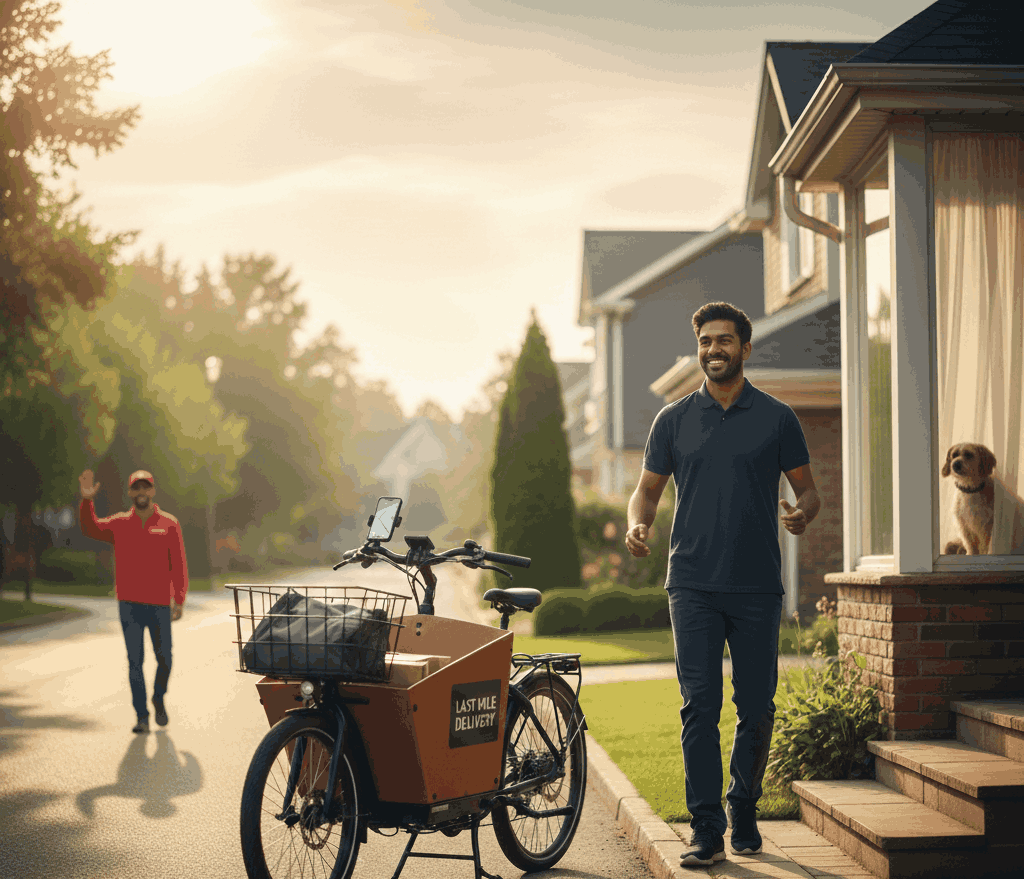
- Sustainable delivery options using electric vehicles and cargo bikes
- AI-powered predictive delivery that anticipates customer needs
- Augmented reality for improved delivery navigation and verification
Businesses that stay ahead of these trends while maintaining focus on current customer needs will continue strengthening their competitive positions.
Real-World Applications Across Industries
The principles of last-mile delivery optimization apply across diverse business sectors, each with unique challenges and opportunities:
E-commerce and Retail: Online retailers face the highest delivery volumes and most demanding customer expectations. Success requires balancing speed, cost, and reliability while offering multiple delivery options. Peak season management becomes critical, as holiday periods can see delivery volumes spike by 200-300%.
Food and Beverage Delivery: Time sensitivity is paramount in food delivery, where minutes matter. Real-time order tracking, efficient route optimization, and driver coordination directly impact food quality and customer satisfaction. Temperature-controlled delivery and contactless handoff protocols have become standard expectations.
Healthcare and Pharmacy: Medical deliveries require special handling, temperature control, and strict regulatory compliance. Same-day prescription delivery has become a competitive necessity, while maintaining HIPAA compliance and ensuring medications reach the correct recipients adds complexity to last-mile operations.
Grocery and Fresh Food: Fresh and frozen items demand cold chain management throughout the delivery process. Customers expect precise delivery windows to ensure they’re home to receive perishable goods, making accurate ETAs and proactive communication essential.
Home Services and Field Operations: While not traditional “deliveries,” field service operations share last-mile optimization challenges. Coordinating technicians, managing appointment windows, and providing arrival notifications mirror delivery logistics while adding service completion complexity.
Each industry benefits from core last-mile delivery management capabilities – route optimization, real-time tracking, automated notifications, and performance analytics – customized to address sector-specific requirements.
Conclusion: Making Last-Mile Delivery a Strategic Advantage
Last-mile delivery has evolved from a necessary cost center to a strategic differentiator that directly impacts customer experience and retention. In an era where consumers have endless options and minimal switching costs, the quality of your delivery experience can determine whether customers become loyal advocates or migrate to competitors.
By implementing robust delivery management software, optimizing routes, providing transparency through real-time tracking, offering flexible delivery options, and maintaining consistent communication, businesses can transform last-mile delivery from a potential liability into a powerful retention driver.
The companies that recognize last-mile delivery as a critical customer experience touchpoint – and invest accordingly in technology, processes, and people – will build stronger customer relationships, improve retention rates, and ultimately achieve sustainable competitive advantages in their markets.
For businesses ready to optimize their last-mile delivery operations, platforms like Tookan provide the comprehensive tools needed to deliver exceptional customer experiences at scale. By leveraging advanced route optimization, real-time tracking, automated communications, and robust analytics, companies can meet rising customer expectations while maintaining operational efficiency and profitability.
In the final analysis, last-mile delivery isn’t just about moving packages from point A to point B – it’s about delivering on your brand promise, creating memorable customer experiences, and building relationships that drive long-term business success. The question isn’t whether to invest in last-mile delivery optimization, but how quickly you can implement solutions that keep your customers coming back.
Subscribe to stay ahead with the latest updates and entrepreneurial insights!
Share this article:


Subscribe to our newsletter
Get access to the latest industry & product insights.
You may be interested in these articles
-
19th October 2026
Kiinnostava pelaaminen ja https://big-luckysfi.com – suomalaisten suosikki kasinopelien maailmassaKiinnostava pelaaminen ja https://big-luckysfi.com – suomalaisten suosikki.. [..]Read story
-
19th October 2026
Wciągające kasyna online z https://allright-casinos.net.pl otwierają świat emocji i wysokich wygranych dla każdego graczaWciągające kasyna online z https://allright-casinos.net.pl otwierają świat.. [..]Read story
-
19th October 2026
Reliable options for online gaming enthusiasts with Patrick Spins casino offer thrilling rewardsReliable options for online gaming enthusiasts with Patrick Spins casino offer.. [..]Read story
-
19th October 2026
Innovative Spielstrategien mit https://kinbets.ch für langfristigen Erfolg im digitalen CasinoInnovative Spielstrategien mit https://kinbets.ch für langfristigen Erfolg im.. [..]Read story