-


- Industries
-
Ordering
Food Grocery Home Services -
Delivery & Dispatch
Pick Up & Delivery Courier Delivery 3PL Delivery Dispatch -
Consultation
Telemedicine Fitness Legal Consultation -
Mobility
Taxi Software App Like Uber Car Rental -
Customer Engagement
Conversational support WhatsApp Marketing Customer Acquisition -
Sales Engagement
Inbound Sales Pipeline Management Sales Performance Analytics
Explore All Industries
-
-
Learn
- Partner
- Pricing








Blog Yelo
Yelo
The Rise of AI-Enhanced Ordering Platforms: How Smart Search & Personalization Changes Buyer Behavior
The digital commerce landscape is undergoing a fundamental shift. Buyers no longer want to scroll endlessly, compare dozens of options, or repeat the same preferences every time they place an order. Instead, they expect platforms to understand them instantly and guide them to the right choice. This expectation is the primary reason AI-enhanced ordering platforms are rapidly becoming the backbone of modern digital commerce. From food delivery and grocery ordering to hyperlocal services and B2B marketplaces, AI-enhanced ordering platforms are redefining how people search, decide, and buy.
Moreover, this transformation is not limited to convenience alone. Artificial intelligence now plays a critical role in shaping buyer psychology, influencing purchasing speed, increasing trust, and improving satisfaction. As smart search and personalization mature, businesses that adopt these technologies gain a decisive advantage, while those that delay risk becoming invisible in an increasingly intelligent marketplace.
What Are AI-Enhanced Ordering Platforms?
At their core, AI-enhanced ordering platforms are digital systems that use artificial intelligence to optimize the entire ordering journey—from discovery to checkout and post-purchase engagement. Unlike traditional ordering systems that rely on static catalogs and rule-based filters, these platforms learn continuously from user behavior, preferences, location, timing, and contextual signals.
As a result, buyers are no longer forced to adapt to technology. Instead, technology adapts to buyers.
These platforms are widely used across:
- Food delivery and cloud kitchens
- Grocery and daily essentials ordering
- Pharmacy and healthcare delivery
- Hyperlocal services (laundry, salon, home services)
- B2B procurement and wholesale marketplaces
Most importantly, AI does not operate as a single feature. Rather, it works as an intelligence layer across search, recommendations, pricing, logistics, and communication.
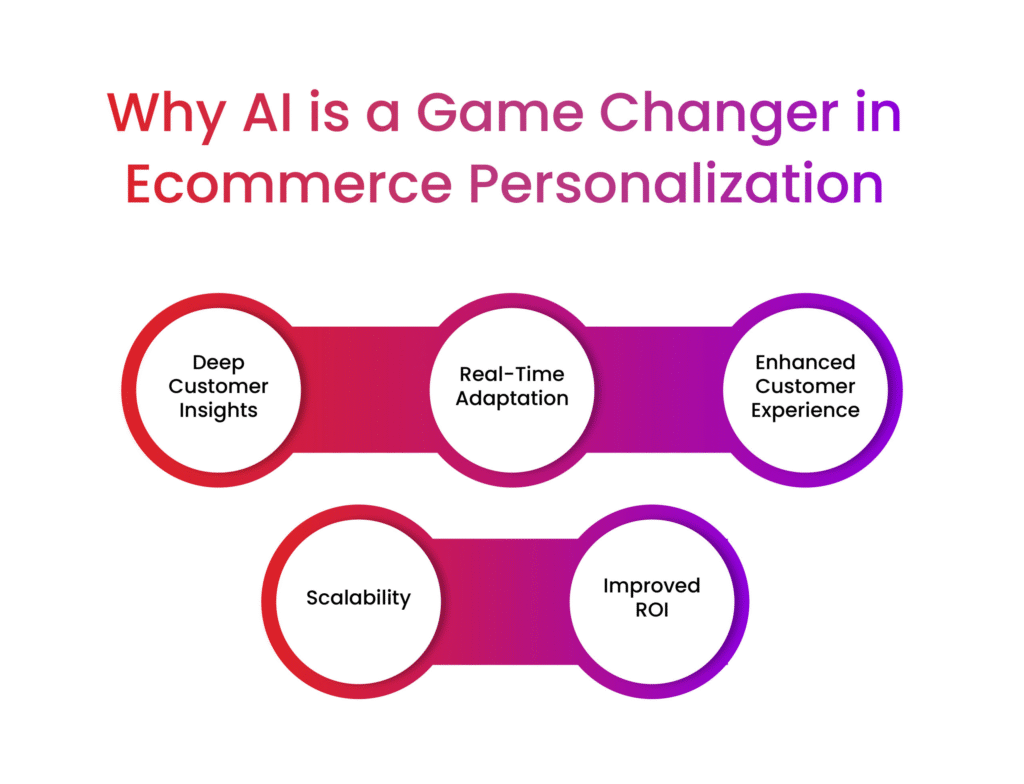
Key Components of AI-Enhanced Ordering Platforms
To understand why these systems are so powerful, it is essential to break down the technologies that power them.
1. Smart Search Powered by AI
AI-driven search goes beyond keyword matching. It understands intent, context, and even ambiguity. For example, when a user searches for “quick dinner under budget,” the platform interprets urgency, price sensitivity, and meal relevance—delivering results accordingly.
2. Machine Learning Models
Machine learning algorithms analyze historical data to predict future actions. Over time, these models refine search rankings, reorder product listings, and personalize content dynamically.
3. Recommendation Engines
Recommendation systems suggest products based on:
- Past purchases
- Browsing behavior
- Similar user profiles
- Local and seasonal trends
According to McKinsey, recommendation engines can drive up to 35% of total revenue in digital commerce environments.
4. Natural Language Processing (NLP)
NLP allows platforms to understand conversational queries, voice searches, and multilingual inputs. This is especially important in mobile-first and regional markets.
5. Predictive Analytics
Predictive analytics forecasts demand, peak hours, inventory shortages, and even churn probability. This helps platforms stay proactive rather than reactive.
The Evolution of Ordering Platforms in the AI Era
To appreciate the impact of AI, it helps to look at how ordering platforms have evolved over time.
Phase 1: Static Digital Catalogs
Early platforms focused on digitizing menus or product lists. Search was limited, personalization was nonexistent, and user experience was largely transactional.
Phase 2: Mobile & Location Awareness
With smartphone adoption, platforms introduced GPS-based discovery and basic personalization. While this improved convenience, decision fatigue remained high.
Phase 3: Intelligence-Driven Experiences
Today’s platforms use AI to reduce effort, shorten decision cycles, and personalize every interaction. Buyers now expect platforms to “know” them from the first interaction.
Statistically, platforms using advanced personalization report 10–15% higher conversion rates compared to those without AI-driven experiences.
How Smart Search Changes Buyer Behavior
Smart search is not merely a usability upgrade—it fundamentally changes how buyers behave.
Reduced Cognitive Load
Traditional search forces users to think. AI-powered search removes that burden by presenting relevant options immediately. Consequently, buyers make decisions faster and with more confidence.
Faster Time to Purchase
According to industry research, intelligent search can reduce time-to-purchase by up to 50%, especially on mobile devices.
Increased Trust
When search results consistently match intent, buyers perceive the platform as reliable. Over time, this trust leads to habitual usage.
Higher Engagement
AI search surfaces relevant products users did not explicitly look for, increasing exploration and average order value.
The Psychology of Personalization in Ordering Platforms
Personalization works because it aligns with core psychological principles.
Relevance Bias
Humans naturally pay more attention to content that feels relevant. Personalized feeds and recommendations tap directly into this bias.
Cognitive Ease
When choices are simplified, decision-making feels effortless. This ease increases satisfaction and reduces abandonment.
Emotional Validation
Seeing “recommended for you” creates a subtle emotional connection. Buyers feel understood rather than marketed to.
Salesforce reports that 78% of consumers are more likely to purchase from brands that personalize experiences effectively.
Data-Driven Impact: Stats That Matter
The influence of AI on buyer behavior is measurable and well-documented:
- Personalized experiences increase revenue by up to 15%
- AI-driven search improves click-through rates by 2×
- Platforms using predictive analytics reduce inventory waste by 20–30%
- AI chat support improves customer satisfaction scores by 25%
- Businesses using personalization report higher repeat purchase rates
These numbers clearly indicate that AI is not experimental—it is commercially essential.
Use Cases Across Industries
Food Delivery
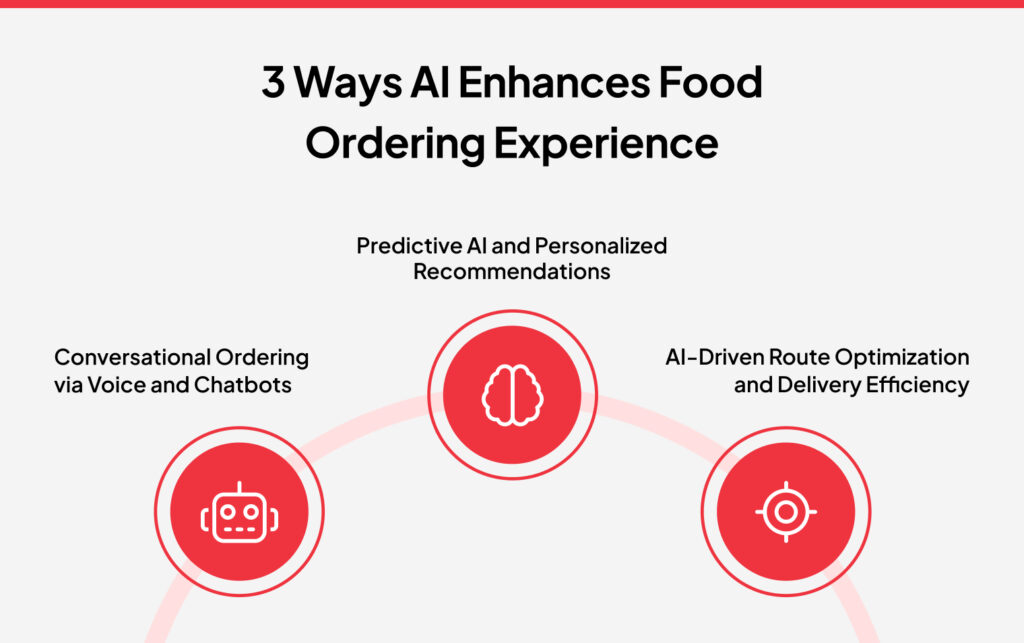
AI predicts preferred cuisines, peak ordering times, and frequently reordered items—boosting retention and order frequency.
Grocery & Essentials
Smart lists, recurring orders, and personalized discounts reduce friction and increase basket size.
Hyperlocal Services
Platforms match users with nearby service providers based on urgency, price sensitivity, and ratings.
B2B Ordering
AI simplifies complex catalogs, suggests bulk discounts, and optimizes reorder cycles.
Challenges in Adopting AI Ordering Systems
Despite its benefits, AI adoption comes with challenges.
Data Quality
AI is only as good as the data it learns from. Inconsistent or biased data leads to poor recommendations.
Privacy & Compliance
Platforms must ensure compliance with global data protection regulations while maintaining transparency.
Infrastructure Costs
AI requires investment in cloud infrastructure, data pipelines, and skilled talent.
Ethical Considerations
Responsible AI design is critical to avoid manipulation, bias, or exclusion.
Future Trends in AI-Driven Ordering
Looking ahead, several trends will define the next phase:
- Zero-click ordering powered by predictive AI
- Voice-based and conversational commerce
- Emotion-aware interfaces
- Autonomous delivery systems
- Hyper-personalized pricing and promotions
As these trends mature, AI will move from “enhancing” ordering to fully orchestrating it.
How Businesses Should Prepare
To stay competitive, businesses should:
- Invest in AI-ready platforms
- Prioritize clean, consent-based data collection
- Focus on user intent rather than static categories
- Continuously test and optimize personalization models
- Align AI strategy with business goals
Those who act early will define market expectations rather than chase them.
Conclusion: How Yelo Enables Intelligent Ordering Experiences
The rise of intelligent commerce is irreversible. Buyers now expect speed, relevance, and personalization as standard—not premium features. Platforms that deliver these experiences win loyalty, revenue, and long-term growth.
This is where Yelo plays a crucial role. Yelo enables businesses to launch and scale modern ordering platforms equipped with smart search, personalized user journeys, automated marketing, and data-driven insights—without the complexity of building everything from scratch.
Whether you operate in food delivery, grocery, pharmacy, or hyperlocal services, Yelo empowers you to deliver intelligent, AI-ready ordering experiences that match evolving buyer behavior and drive sustainable growth.
Subscribe to stay ahead with the latest updates and entrepreneurial insights!
Share this article:


Subscribe to our newsletter
Get access to the latest industry & product insights.
You may be interested in these articles
-
Yelo28th January 2026
How AI Is Transforming Hyperlocal Marketplaces in 2026: From Personalisation to Autonomous DeliveryUrban commerce in 2026 is no longer defined by distance—it’s defined by.. [..]Read story
-
Yelo21st January 2026
Beyond the Storefront: How Direct-to-Consumer (D2C) Brands Are Reclaiming Their Margins in 20261. Introduction: The Great Decoupling of D2C Brands By 2026, the digital.. [..]Read story
-
Yelo14th January 2026
How Hyperlocal Delivery Is Changing Urban E-commerce: Trends and Predictions for 2026The retail landscape has undergone a dramatic transformation. As we move.. [..]Read story
-
Yelo7th January 2026
Mastering Hyperlocal Commerce: Proven Growth Strategies to Boost Orders for Local Businesses in 2026In the digital landscape of 2026, the way we perceive local commerce has.. [..]Read story