-


- Industries
-
Ordering
Food Grocery Home Services -
Delivery & Dispatch
Pick Up & Delivery Courier Delivery 3PL Delivery Dispatch -
Consultation
Telemedicine Fitness Legal Consultation -
Mobility
Taxi Software App Like Uber Car Rental -
Customer Engagement
Conversational support WhatsApp Marketing Customer Acquisition -
Sales Engagement
Inbound Sales Pipeline Management Sales Performance Analytics
Explore All Industries
-
-
Learn
- Partner
- Pricing







Blog Jungleworks
The Future of Hyperlocal Delivery: Trends Businesses Must Watch
The way we shop has fundamentally changed. Gone are the days when waiting a week for a package felt normal. Today’s consumers expect their purchases to arrive within hours, sometimes even minutes. This shift hasn’t happened by accident. It’s the result of hyperlocal delivery revolutionizing how businesses connect with customers in their immediate vicinity.
Hyperlocal delivery has grown from a nice-to-have convenience into a business imperative. Whether you’re running a restaurant, pharmacy, grocery store, or retail shop, understanding where this industry is headed can mean the difference between thriving and merely surviving. The statistics paint a compelling picture: the hyperlocal delivery market is projected to grow exponentially over the next five years, driven by changing consumer behaviors and technological innovation.
But what exactly does the future hold? Which trends should business owners be watching closely? Let’s dive deep into the forces reshaping hyperlocal delivery and explore how forward-thinking companies are positioning themselves for success.
The Rise of 15-Minute Delivery: Speed Becomes the New Competitive Battleground
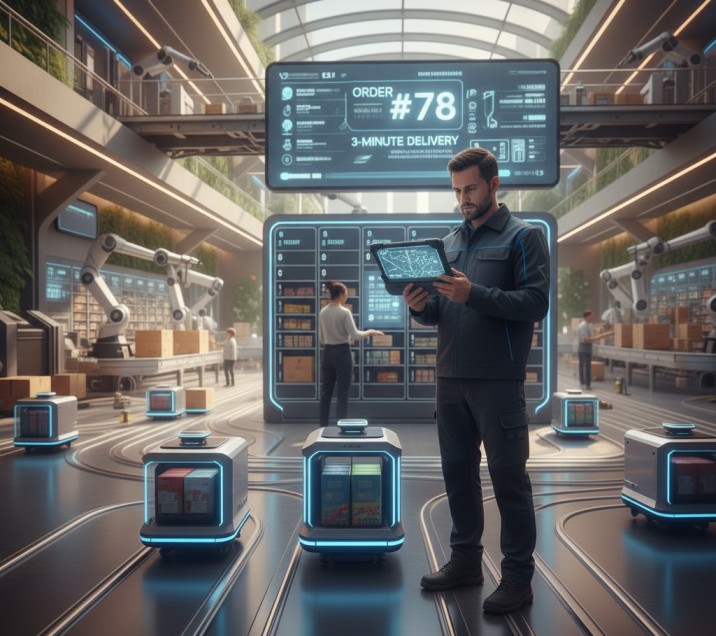
Remember when same-day delivery felt revolutionary? That timeline now seems almost leisurely. We’re entering the era of ultra-fast delivery, where 15 to 30 minutes is becoming the new standard for hyperlocal services.
This trend started with food delivery but has rapidly expanded into groceries, pharmaceuticals, and even electronics. Major cities worldwide now host dark stores and micro-fulfillment centers strategically positioned to serve dense neighborhoods within minutes. The concept is simple: store inventory closer to customers, optimize routes intelligently, and deliver at lightning speed.
For businesses, this creates both opportunity and pressure. Customers who experience 15-minute delivery from one merchant begin expecting it from everyone. The challenge lies in building the infrastructure to support this speed without destroying your margins. Smart businesses are investing in route optimization technology and delivery management platforms like Tookan that help them fulfill orders efficiently without maintaining massive fleets or infrastructure.
The key insight here is that speed alone isn’t enough. Businesses must balance velocity with reliability and cost-effectiveness. A delivery that arrives in 12 minutes but costs the business more than the order’s profit margin isn’t sustainable. The winners in this space will be those who use technology to find the sweet spot between customer satisfaction and operational efficiency.
Micro-Fulfillment Centers Transform Urban Landscapes
Traditional warehouses located on the outskirts of cities are giving way to a network of smaller, strategically placed micro-fulfillment centers. These compact facilities, sometimes no larger than a convenience store, are being embedded directly into residential and commercial neighborhoods.
The logic is straightforward: proximity equals speed. By storing high-demand inventory within a mile or two of your customers, you can fulfill orders in minutes rather than hours. Grocery chains are converting portions of existing stores into fulfillment zones. Retailers are partnering with shared logistics providers to access warehouse space they could never afford independently.
This trend is particularly transformative for small and medium-sized businesses. You don’t need to own a warehouse anymore. Third-party logistics providers now offer shared micro-fulfillment spaces where multiple businesses can store inventory and leverage common delivery infrastructure. This democratizes hyperlocal delivery, making it accessible to businesses that previously couldn’t compete with retail giants.
The sophistication of inventory management in these centers is impressive. Artificial intelligence predicts which products will be in demand in specific neighborhoods at certain times, ensuring the right items are always in stock. This predictive capability minimizes waste while maximizing fulfillment speed, a combination that directly impacts profitability.
Sustainability Shifts from Nice-to-Have to Non-Negotiable
Consumers increasingly care about how their purchases reach them, not just when. The environmental impact of delivery is moving to the forefront of purchasing decisions, particularly among younger demographics who are willing to pay more or wait longer for eco-friendly options.
This trend is driving massive innovation in last-mile delivery. Electric vehicles, cargo bikes, and even delivery robots are becoming common sights in urban areas. Cities are responding with policies that incentivize or mandate low-emission delivery methods, creating both regulatory pressure and opportunity for businesses that adapt quickly.
Forward-thinking companies are discovering that sustainability can actually improve operational efficiency. Cargo bikes navigate congested urban streets faster than vans. Electric vehicles have lower maintenance costs than traditional delivery trucks. Route optimization software that minimizes miles driven reduces both emissions and fuel expenses.
The businesses winning on sustainability are those that communicate their efforts effectively. Customers want transparency about delivery methods, carbon footprints, and offset initiatives. Some delivery platforms now let customers choose eco-friendly delivery options, even if they take slightly longer. This transparency builds brand loyalty among environmentally conscious consumers, a demographic that continues to grow.
Autonomous Delivery Technology Moves from Pilot to Practice
Delivery robots and drones have been “just around the corner” for years, but we’re finally seeing meaningful deployment in real-world scenarios. While fully autonomous delivery isn’t yet ubiquitous, it’s no longer experimental either.
Sidewalk robots are making deliveries on college campuses, in retirement communities, and in controlled urban environments. These machines handle the last few hundred meters of delivery, the most expensive part of the logistics chain. Meanwhile, drone delivery is gaining regulatory approval in select markets for lightweight packages, particularly in suburban and rural areas where road infrastructure is less developed.
For businesses, the question isn’t whether autonomous delivery will happen, but when to integrate it into your operations. Early adopters gain competitive advantage and valuable learning, but the technology still has limitations. Weather affects drones. Robots struggle with stairs and complex buildings. Regulatory landscapes remain uncertain in many jurisdictions.
The smart approach is to stay informed and be ready to pilot these technologies when they mature in your market. Companies that have robust delivery management systems, such as those using platforms like Tookan, will find it easier to integrate autonomous delivery when the time comes. The technology layer that manages human couriers can be adapted to manage robotic ones, creating a hybrid fleet that leverages the strengths of both.
Hyper-Personalization Through Data and AI
Delivery is becoming personalized in ways that would have seemed impossible a few years ago. Artificial intelligence analyzes customer behavior to predict not just what you’ll order, but when you’ll want it delivered and how you prefer to receive it.
This goes far beyond basic delivery windows. Advanced systems now understand that you prefer morning deliveries on weekdays but afternoon deliveries on weekends. They know you want contactless delivery for most items but prefer to personally receive high-value packages. They predict when you’ll reorder regular items and proactively suggest delivery times.
For businesses, this level of personalization creates deeper customer relationships. When you consistently deliver exactly how and when a customer prefers, you’re not just providing a service; you’re demonstrating that you understand and value them. This emotional connection translates into loyalty and higher lifetime value.
The data generated by delivery operations also reveals valuable insights about customer behavior, demand patterns, and operational efficiency. Businesses that effectively harness this data can optimize everything from inventory placement to staffing levels. The challenge lies in collecting, analyzing, and acting on this information without overwhelming your team or violating customer privacy.
The Platform Economy Reshapes Delivery Infrastructure
Rather than building delivery capabilities from scratch, businesses increasingly rely on specialized platforms that provide end-to-end logistics solutions. This platform economy allows companies to access sophisticated delivery infrastructure without massive capital investment.
These platforms offer everything from courier management and route optimization to customer communication and analytics. A small bakery can access the same technological sophistication that a major retailer uses, leveling the competitive playing field. The key is choosing platforms that integrate smoothly with your existing systems and scale as your business grows.
Tookan exemplifies this trend, offering businesses comprehensive delivery management capabilities without requiring them to build complex systems internally. By handling route optimization, driver tracking, customer notifications, and performance analytics, such platforms let businesses focus on their core competencies while still offering excellent delivery experiences.
The platform approach also provides flexibility. Businesses can quickly scale delivery capacity up or down based on demand, accessing courier networks only when needed rather than maintaining expensive permanent fleets. During peak periods like holidays or promotional events, you can handle volume spikes without permanent overhead increases.
On-Demand Expectations Extend Beyond Traditional Categories
Hyperlocal delivery started with food and groceries but is rapidly expanding into categories that previously seemed unsuitable for quick delivery. Prescription medications, automotive parts, office supplies, and even fashion items are now delivered within hours in many markets.
This expansion is driven by changing consumer psychology. Once customers experience the convenience of on-demand delivery in one category, they expect it everywhere. Why should printer ink take three days to arrive when dinner comes in thirty minutes? This expectation is forcing businesses across industries to reconsider their delivery strategies.
For businesses in traditionally non-urgent categories, this trend represents both challenge and opportunity. Yes, you face pressure to offer faster delivery. But you also have the chance to differentiate yourself from competitors who haven’t yet adapted. Being the first furniture store in your area to offer same-day delivery for in-stock items, or the first pharmacy with 30-minute prescription delivery, creates a powerful competitive advantage.
The key is understanding which products your customers genuinely need quickly and building delivery capabilities around those items. Not everything requires hyperlocal delivery, but identifying what does and executing it well can transform your business.
Ghost Kitchens and Virtual Stores Multiply
The concept of businesses that exist only for delivery, with no traditional storefront, continues to gain traction. Ghost kitchens in the restaurant industry pioneered this model, and it’s now spreading to other sectors. Virtual convenience stores, pharmacy concepts, and even apparel brands are operating profitably without customer-facing locations.
This model radically reduces overhead while allowing businesses to test markets, products, and concepts with minimal risk. Want to see if a neighborhood will support your product? Set up delivery-only operations from a micro-fulfillment center and test the market for a fraction of traditional expansion costs.
For established businesses, the virtual model offers expansion opportunities without the capital intensity of opening new locations. You can serve new neighborhoods or cities by establishing fulfillment capabilities there, delivering your products without the overhead of a full retail presence. This approach is particularly powerful when combined with digital marketing that builds brand awareness without requiring foot traffic.
Real-Time Tracking and Communication Become Table Stakes
Customers no longer accept delivery opacity. They want to know exactly where their order is, when it will arrive, and who is delivering it. Real-time tracking has moved from premium feature to basic expectation, and businesses that don’t provide it face customer frustration and support burden.
The good news is that technology has made comprehensive tracking accessible and affordable. Modern delivery management systems provide customers with live updates, precise ETAs, and direct communication with couriers. This transparency dramatically reduces “Where is my order?” support requests while increasing customer satisfaction.
Beyond basic tracking, the frontier is predictive communication. Rather than customers checking where their delivery is, systems proactively notify them of progress, delays, or issues. If a delivery will be late, customers receive automatic notifications with updated ETAs and explanations. This proactive approach shows respect for customer time and manages expectations effectively.
Implementing these capabilities doesn’t require building custom technology. Platforms like Tookan include customer communication features out of the box, providing tracking links, automated notifications, and delivery confirmations that keep customers informed throughout the delivery journey.
Dynamic Pricing and Delivery Windows Optimize Operations
Just as ride-sharing services adjust prices based on demand, delivery businesses are implementing dynamic pricing models that encourage customers to choose delivery windows that align with operational efficiency.
This trend benefits both businesses and customers. Customers who choose off-peak delivery times receive discounts. Businesses smooth demand throughout the day, reducing the need for excess capacity during peak periods. The result is better resource utilization, lower costs, and more sustainable operations.
Sophisticated systems now analyze traffic patterns, weather conditions, courier availability, and order volume to suggest optimal delivery windows and pricing. This dynamic approach maximizes the number of deliveries each courier can complete while maintaining speed and service quality.
For businesses implementing dynamic pricing, the key is transparency and value. Customers accept variable pricing when they understand the logic and receive genuine value for flexibility. Offering a small discount for choosing a three-hour window instead of one-hour delivery can significantly improve your operational efficiency while enhancing customer perception of getting a good deal.
Integration and Ecosystem Connectivity Determine Success
No delivery system operates in isolation anymore. Success depends on how well your delivery operations integrate with inventory management, point-of-sale systems, customer relationship management, and e-commerce platforms.
Businesses that achieve seamless integration across these systems create magic for customers. When you place an order, the system automatically checks inventory, optimizes the delivery route, assigns the best courier, and updates the customer simultaneously. This orchestration happens invisibly, creating effortless experiences.
The challenge for businesses is choosing technologies that work together effectively. Open APIs, standard integrations, and platform ecosystems matter more than ever. When evaluating delivery solutions, smart businesses look beyond features to assess integration capabilities. A slightly less sophisticated system that integrates perfectly with your existing technology often delivers better results than a feature-rich platform that operates as an island.
This is where comprehensive platforms prove their value. Rather than stitching together multiple point solutions, businesses can use integrated platforms that handle multiple aspects of delivery logistics while connecting to existing business systems. This approach reduces complexity while providing the functionality needed to compete effectively.
Preparing Your Business for the Hyperlocal Future
Understanding these trends is just the first step. The real question is how to prepare your business for this rapidly evolving landscape. Here are practical steps to position yourself for success:
Start by assessing your current delivery capabilities honestly. Where are the gaps? What do customers complain about? Which competitors are delivering better experiences? This assessment creates a baseline for improvement.
Next, prioritize based on your specific business and customers. Not every trend will be equally important for your context. A pharmacy’s priorities differ from a restaurant’s, and a dense urban market has different dynamics than a suburban one. Focus on trends that will most impact your customers and competitive position.
Invest in flexible, scalable technology that can grow with your business and adapt to changing market conditions. Platforms like Tookan provide this flexibility, allowing businesses to start simple and add sophisticated capabilities as needs evolve. This approach avoids over-investment in unused features while ensuring you’re not locked into systems that can’t scale.
Build partnerships strategically. You don’t need to do everything yourself. Courier networks, micro-fulfillment providers, and technology platforms can provide capabilities you couldn’t economically build independently. The key is maintaining control over the customer experience while leveraging specialized providers for operational execution.
Finally, stay customer-focused throughout your evolution. Technology and trends matter only insofar as they improve customer experience and business results. Regularly solicit customer feedback, monitor satisfaction metrics, and be willing to adjust your approach based on what you learn.
The Competitive Advantage of Early Adaptation
The businesses that will dominate hyperlocal delivery in the coming years are those adapting now, not waiting until trends become unavoidable. Early movers gain experience, customer loyalty, and operational expertise that become increasingly difficult for laggards to match.
This doesn’t mean chasing every trend blindly. It means thoughtfully evaluating which developments align with your business strategy and customer needs, then moving decisively to implement them. The cost of adaptation is almost always lower than the cost of obsolescence.
Hyperlocal delivery is no longer just about convenience. It’s becoming a fundamental aspect of customer experience across industries. As these trends accelerate, the gap between businesses that deliver excellent hyperlocal experiences and those that don’t will widen dramatically.
The future of hyperlocal delivery is being written right now, in real-time, by businesses willing to innovate and adapt. The question isn’t whether these trends will reshape your industry, but whether you’ll be leading the change or scrambling to catch up. The tools, technologies, and strategies exist today to build competitive hyperlocal delivery capabilities. What’s needed is the vision to see where the market is heading and the commitment to get there first.
Your customers are already living in this future, expecting speed, transparency, personalization, and sustainability from every business they engage with. The only question that remains is whether your business will meet them there.
Subscribe to stay ahead with the latest updates and entrepreneurial insights!
Share this article:


Subscribe to our newsletter
Get access to the latest industry & product insights.
You may be interested in these articles
-
Jungleworks4th February 2026
Delivery Management Software: A Complete Buyer’s Guide for 2026In today's fast-paced digital economy, efficient delivery operations can make.. [..]Read story
-
Jungleworks2nd February 2026
Delivery Software for Dark Stores & Quick Commerce: The Complete Guide for 2026The retail landscape has fundamentally transformed. With consumers demanding.. [..]Read story
-
Jungleworks27th January 2026
Last Mile Delivery KPIs Every Business Must TrackThe last mile of delivery - the final step in getting products from a.. [..]Read story
-
Jungleworks22nd January 2026
Why High Delivery Costs Are Killing Margins for Restaurants, Grocery & E-commerce BrandsHigh delivery costs are silently destroying profit margins across the.. [..]Read story